UAE Music Licensing in 2026: What DJ Trainers and Studio Operators Must Do Before December

Updated: 7 hours ago
The clock is already running. On December 1, 2026, Federal Decree-Law No. 38 of 2021 moves from transitional guidance into fully enforceable law, and music businesses across the UAE will either be compliant or exposed to real financial and operational penalties. For DJ training schools, music production studios, and vocal recording services operating in cities like Dubai, this is not a regulatory technicality to revisit later. It is a structural shift in how music rights are cleared, managed, and enforced.
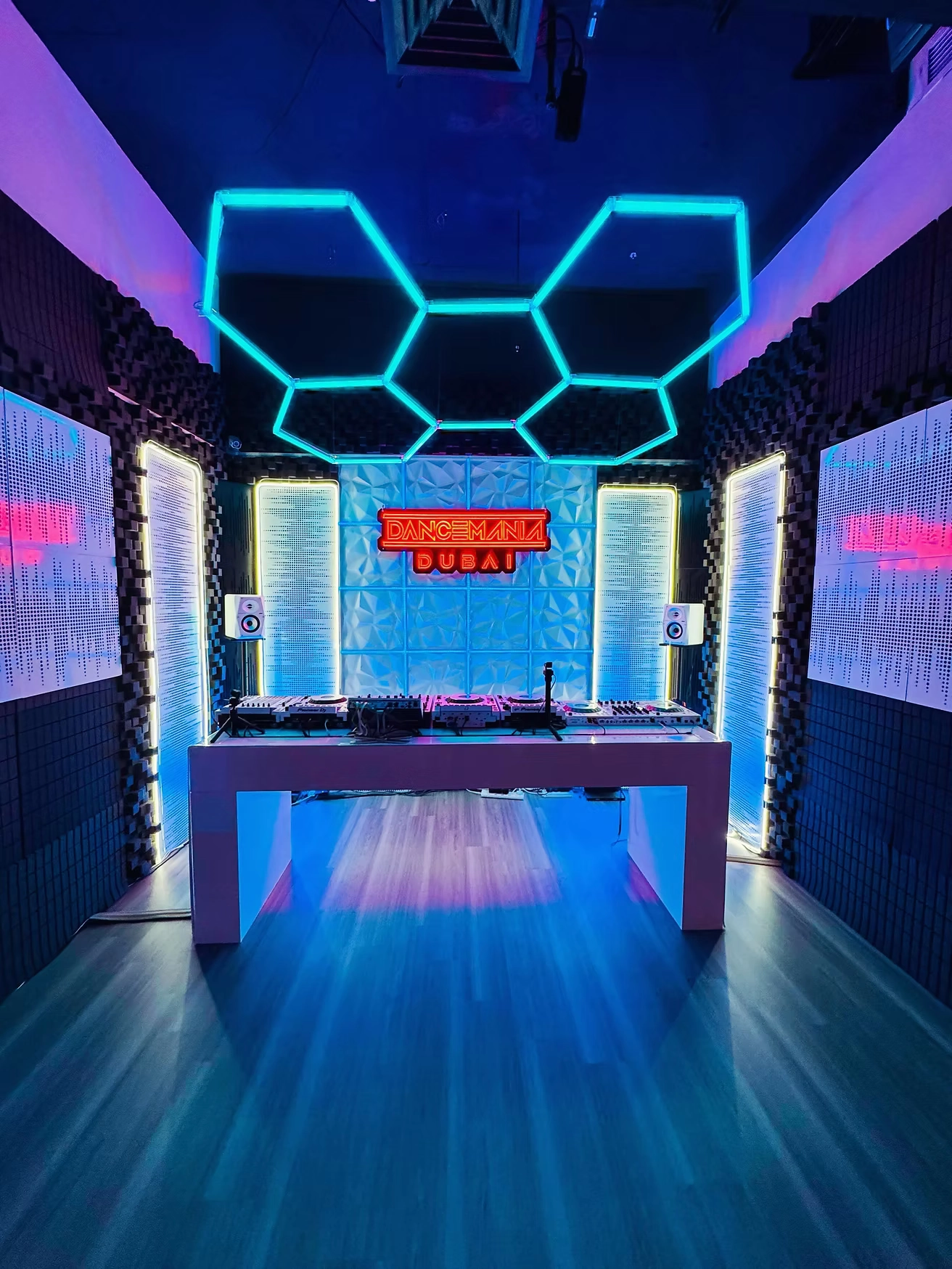
Whether you run a boutique recording suite, teach aspiring DJs through a school like Dancemania Dubai, or operate a vocal coaching studio, the UAE's new collective management framework now governs how you legally use music in a commercial context. Two newly operational Collective Management Organizations handle licensing, rights categories have been precisely defined, and the Ministry has enforcement tools it did not previously hold.
This guide breaks the framework down into plain, actionable steps. You will learn exactly who the framework covers, which licenses apply to your specific operations, how to approach both CMOs, and what a defensible compliance record looks like before inspectors arrive.
Why December 1, 2026 Is a Hard Deadline for Music Businesses
Federal Decree-Law No. 38 of 2021 and Cabinet Resolution No. 47 of 2022 established the UAE's collective music rights framework. December 1, 2026 is not a transition date; it is the point at which enforcement becomes active and penalties become legally enforceable.
The UAE Ministry of Economy and Tourism holds inspection powers, the authority to review business records, and the right to act on complaints filed by rights holders against unlicensed operators. This is a hard regulatory regime, not a soft rollout.
DJ training schools, music production studios, and vocal recording services are explicitly named within the commercial music user scope. Operators offering a professional vocal recording session or DJ instruction cannot argue that training environments fall outside the framework; the language removes that ambiguity entirely.
Version 1.1 of the Collective Management Guide for Music, issued by the Ministry in August 2026, confirms the framework is fully operational. Businesses that miss the deadline face enforceable legal penalties, not advisory warnings. Proactive compliance is the only commercially defensible position.
What the UAE Collective Management Framework Actually Covers
As established above, Federal Decree-Law No. 38 of 2021 casts a wider net than most operators realise, making it the essential first step to understand what it actually protects before taking any licensing action.
What receives automatic protection
The law protects musical works with or without lyrics, audiovisual works, sound recordings, and derivative works, including melodies, arrangements, compositions, and remixes. Every track played during a DJ lesson, every beat used in a music production course, and every arrangement created by a student falls within these categories. Rights attach at the moment of creation; no registration is required. The Ministry of Economy does recommend registration for enforcement purposes, which matters particularly to UAE-based producers and artists building an original catalogue.
Who counts as a commercial user
The framework extends well beyond entertainment venues. Hotels, gyms, retail stores, airlines, and music training facilities and production studios are all classified as commercial music users. Sound engineer work in Dubai studios, live music rehearsal spaces, and music events at Dubai venues each trigger obligations under this framework, not just background-music playback.
Two rights categories training businesses must understand
Performing rights cover music played or communicated during instruction. Mechanical and reproduction rights cover recordings made, stored, or distributed as part of course delivery. Both are relevant to any studio or training operation, and both require separate attention when applying for licences.
The Two CMOs You Need to Know: EMRA and Music Nation
As introduced in the section above, two officially sanctioned CMOs now administer music rights clearance in the UAE: Emirates Music Rights Association (EMRA) and Music Nation, replacing the previous model of direct negotiation with individual rights holders.
Which of the two you need depends on the music catalog your business uses. If your sessions draw on repertoire administered by both CMOs, you will need licences from both. There is no single universal licence that covers all music in the UAE market.
Fee schedules are sector-specific. Tariffs are calculated using objective criteria including venue size, capacity, and revenue. A one-to-one DJ training studio operates at a materially different scale than a multi-room production facility, and the fee structure reflects that distinction.
Specific tariff figures have not been publicly confirmed for individual business categories. Contact EMRA and Music Nation directly to obtain current fee schedules before submitting any application.
Step 1: Audit Every Way Your Business Uses Music
Before you contact either CMO, know precisely what you are licensing. Start with a written inventory covering every point where music is active.
What to log:
Tracks played during DJ training sessions
Beats, loops, and samples used in music production courses
Backing tracks used in vocal recording sessions
Music played in reception, waiting, or communal areas
For each item, record the source: commercially released recordings, royalty-free library tracks, original compositions by students or instructors, or licensed sample packs. Each category carries different rights implications, so the source column matters as much as the title.
Then document how each track is used. Live playback, streaming, reproduction into a recording, and distribution to students as course materials each trigger different rights categories. A track played through studio monitors during a lesson is not the same rights scenario as that same track recorded into a student's coursework file.
Finally, capture volume metrics: sessions per week, students per session, and whether sessions are recorded and retained. These figures directly influence fee calculations under sector-specific tariff structures.
Dancemania's range of one-to-one and group courses spans DJ training, music production, and vocal recording services. Each represents a distinct use case and should be catalogued as a separate line in your audit, not grouped together.
Step 2: Determine Which CMO (or Both) Applies to Your Catalog
Building on your Step 1 audit, cross-reference your music inventory against the catalogs administered by EMRA (Emirates Arts and Music Rights Association) and Music Nation, as introduced above. The CMO representing the rights holders whose music features most heavily in your sessions becomes your primary licensing counterpart.
The split is rarely clean. DJ course sessions typically rely on internationally released commercial tracks, while music production in Dubai studios often incorporates regionally signed or locally produced material. If those two catalogs fall under different CMOs, dual licensing applies. Do not assume one licence covers both.
Contact EMRA and Music Nation directly to request catalog information, current fee schedules, and application procedures for your specific business category. This direct enquiry is the only reliable method of confirming applicability before you submit anything.
One frequently overlooked obligation: where students and instructors create original works during production courses, they become rights holders under the framework themselves. Inform them of this position in writing so they understand their own standing.
Log every interaction with both CMOs: date, contact name, and substance of what was discussed. If the Ministry of Economy and Tourism inspects your premises, that correspondence file is your first line of defence.
Step 3: Initiate Your Licence Applications Before the Deadline
Once your CMO determination is complete, begin your applications without delay. As noted above, both EMRA and Music Nation will experience high application volumes as the December 1, 2026 deadline approaches. Processing times may extend significantly in the final weeks; submitting early is the only reliable safeguard.
Prepare these documents before you open any application:
Business trade licence
Studio floor plan or venue layout showing capacity
Description of music use: nature, frequency, and session types
Revenue figures where applicable for fee calculation
If your audit identified the need for dual licensing, submit to both EMRA and Music Nation simultaneously, not sequentially. Sequential submission risks one licence clearing while the other remains pending at the deadline, leaving your operation partially exposed.
Once licences are granted, store originals securely and keep accessible copies on the premises. Ministry inspectors are authorised to request proof of licensing during on-site visits with no advance notice required.
If your business offers professional vocal recording sessions, live music events, or music consultancy services alongside training, confirm with both CMOs whether those activities require additional event-specific or ancillary licences beyond your core studio licence.
Step 4: Understand the Rights Categories Relevant to DJ and Production Training
With your licence applications in motion, understanding which rights categories your operations trigger will sharpen both your CMO conversations and your compliance records.
As established in the framework section above, performing rights cover any public performance or broadcast of a musical work -- playing tracks during DJ lessons, using music in group classes, and routing audio through studio monitors in the presence of students all engage performing rights. Likewise, mechanical rights address reproduction: copied tracks in course materials, student mixes recorded to digital media, and audio files stored on shared platforms as part of a curriculum all bring mechanical rights into play alongside performing rights.
Neighbouring rights are a separate category. They protect performing artists and sound recording producers, distinct from composition and lyric rights held by songwriters. A single track used in a DJ training session may involve rights held by multiple parties across both categories simultaneously.
Derivative works require particular attention. Student arrangements and instructor remixes created during music production courses generate new works, but original rights holders retain interests in those derivatives, directly affecting how student output is stored, shared, or published.
Sound engineer work involving re-recording, remastering, or stem creation from existing tracks touches all of the above categories and must be reviewed for compliance as part of the same audit, not treated separately.
Step 5: Build a Compliance Record That Can Withstand a Ministry Inspection
Knowing which rights apply is only half the obligation. The Ministry of Economy and Tourism holds explicit authority to inspect your premises, review financial and operational records, and act on complaints from rights holders. Treat every document you create as potential evidence, not paperwork.
Maintain a music log updated after every session. A digital spreadsheet works well. For each entry, record the track name, source, session date, session type, and the licence covering that use. This gives an inspector an immediate, legible audit trail.
Consolidate all compliance documents in one accessible file:
Licensing agreements from EMRA and/or Music Nation
All CMO correspondence, including application emails
Fee payment receipts
Any exemption documentation submitted or received
The file must be reachable by whoever handles an unannounced inspection.
Review the log whenever your catalog or course offering changes. Adding live performance coaching to your DJ training programme, for example, may alter your licence scope and require a fee reclassification.
Appoint a named compliance contact now. In a small studio or training school, this is typically the owner or senior instructor. That person owns record maintenance and CMO liaison, so accountability is unambiguous when an inspection occurs.
The Education Exemption: What We Know and What Remains Unclear
Beyond documentation, there is one provision in the framework that many DJ training schools and music production academies will immediately focus on: the education exemption.
The framework does acknowledge that education institutions have limited exceptions from licensing requirements. However, the Ministry of Economy and Tourism has not publicly defined the specific criteria that qualify an entity for that exemption. The line between an accredited educational institution and a commercial training business remains formally undrawn.
Do not assume your business qualifies. Acting on an unconfirmed exemption that is later denied leaves you exposed to enforceable penalties from 1 December 2026 onward, with no grace period documented in current guidance.
As covered in Step 3, the recommended approach is to pursue both actions in parallel: submit your CMO licence application to EMRA and/or Music Nation, and submit a written enquiry to the Ministry of Economy and Tourism requesting formal clarification on whether your specific operation qualifies for the education exception. Applying first and clarifying second carries far less risk than the reverse.
Reviewing Your Music Sources to Reduce Ongoing Licensing Exposure
Beyond the exemption question, reviewing what music you actually use offers a practical route to managing your licensing footprint.
Not all tracks used in training require CMO licensing. Original compositions created entirely by an instructor with no third-party rights attached, and tracks sourced from properly licensed royalty-free libraries, may fall outside collective management scope. For introductory courses where specific commercial tracks are not pedagogically essential, shifting part of your catalog to royalty-free or Creative Commons licensed material can reduce costs and simplify compliance.
For professional DJ instruction, however, this calculation changes. Using commercially released music is central to the educational purpose of one-to-one DJ training; students must work with real-world repertoire to develop professional skills. CMO licensing is unavoidable here and should be treated as a standard operating cost alongside equipment, studio space, and instructor fees.
Music events Dubai operators and live performance coaches using studio facilities for rehearsal or event preparation should confirm explicitly whether their CMO licence covers that dual use, or whether a separate licence is required.
Finally, register for updates from both EMRA and Music Nation after your initial application is submitted. Catalogues, tariff structures, and procedures will evolve after the December 2026 launch date.
Your Pre-December Compliance Action Plan: A Summary
With your music sources reviewed, the remaining task is consolidating every obligation into a clear sequence before the deadline arrives.
Audit first. Document every music use across your training and studio operations, categorise by use type (performance, reproduction, distribution), and identify each track's source before contacting any CMO.
Contact EMRA and Music Nation directly. Confirm which organisation, or both, administers the rights relevant to your catalog. Request current fee schedules for your specific business category rather than relying on general tariff summaries.
Apply early. Submit licence applications well ahead of 1 December 2026. Commercial users across hospitality, fitness, retail, and entertainment will all be filing simultaneously; processing queues will lengthen as the deadline approaches.
Build a compliance record. As detailed in Step 5 above, maintain a music log, copies of all licensing documents, and payment receipts in a single accessible file ready for on-site Ministry review.
Do not assume the education exemption applies. Submit a written enquiry to the Ministry of Economy and Tourism to request formal clarification, and apply for licences simultaneously. Applying first eliminates deadline risk if clarification is delayed or denied.
Unlicensed commercial music use constitutes copyright infringement under Federal Decree-Law No. 38 of 2021 and carries enforceable legal penalties. Businesses that need structured support through this process can access professional music production and training expertise through Dancemania Dubai's consultancy services, covering music usage audits and framework guidance for specific training environments.
Conclusion
The UAE's December 1, 2026 deadline is not a formality. It represents a genuine structural shift in how music rights are enforced across training environments, studios, and production spaces throughout the country.
The path forward is straightforward: audit your music use now, engage EMRA and Music Nation directly, submit applications early, and build a compliance record before inspectors arrive. Businesses that act in 2025 will navigate this process calmly. Those that wait until October or November will face queues, pressure, and real legal exposure.
Do not leave your business unprotected while competitors secure their licences. Begin your audit this month, request current fee schedules, and treat compliance as a competitive advantage rather than a burden.
The framework is clear. The deadline is fixed. The only variable is how prepared you choose to be.
Frequently Asked Questions
What happens to my music business on December 1, 2026 if I'm not compliant?
December 1, 2026 marks the transition from transitional guidance to fully enforceable law under Federal Decree-Law No. 38 of 2021. If you are not compliant, your business will face real financial and operational penalties from the UAE Ministry of Economy and Tourism. These are not advisory warnings—they are legally enforceable penalties. The Ministry has explicit authority to conduct inspections, review your records, and act on complaints from rights holders. There is no grace period documented in current guidance.
Do I need licenses from both EMRA and Music Nation, or just one?
It depends on your music catalog. If your DJ training, music production, or vocal recording sessions rely solely on music administered by one CMO, you need only that license. However, if your sessions draw on repertoire from both EMRA (Emirates Music Rights Association) and Music Nation catalogs, you will need licenses from both organizations. There is no single universal license covering all music in the UAE market. You must contact both CMOs directly to confirm which organization administers your repertoire before applying.
Does the education exemption protect my DJ training school or music production studio from licensing requirements?
The framework acknowledges that education institutions have limited exceptions from licensing requirements, but the UAE Ministry of Economy and Tourism has not publicly defined the specific criteria that qualify an entity for this exemption. The line between an accredited educational institution and a commercial training business remains formally undrawn. Do not assume your business qualifies. The recommended approach is to submit both your CMO license application and a separate written enquiry to the Ministry requesting formal clarification on whether your specific operation qualifies for the education exception. This eliminates deadline risk if clarification is delayed or denied.
What specific documents and records do I need to have ready if Ministry inspectors arrive unannounced?
You should maintain all compliance documents in one accessible file, including: your business trade license, licensing agreements from EMRA and/or Music Nation, all CMO correspondence (including application emails), fee payment receipts, and any exemption documentation. Additionally, maintain a digital music log updated after every session recording the track name, source, session date, session type, and the license covering that use. Ministry inspectors are authorized to request proof of licensing during on-site visits with no advance notice, so these documents must be immediately accessible. Appoint a named compliance contact to maintain records and handle CMO liaison.
Can I reduce my licensing obligations by using royalty-free or Creative Commons music instead of commercial tracks?
Yes, partially. Original compositions created entirely by an instructor with no third-party rights attached, and tracks sourced from properly licensed royalty-free libraries, may fall outside collective management scope. For introductory courses, shifting part of your catalog to royalty-free material can reduce costs and simplify compliance. However, for professional DJ instruction, using commercially released music is central to the educational purpose—students must work with real-world repertoire to develop professional skills. In these cases, CMO licensing is unavoidable and should be treated as a standard operating cost alongside equipment and instructor fees.


Comments