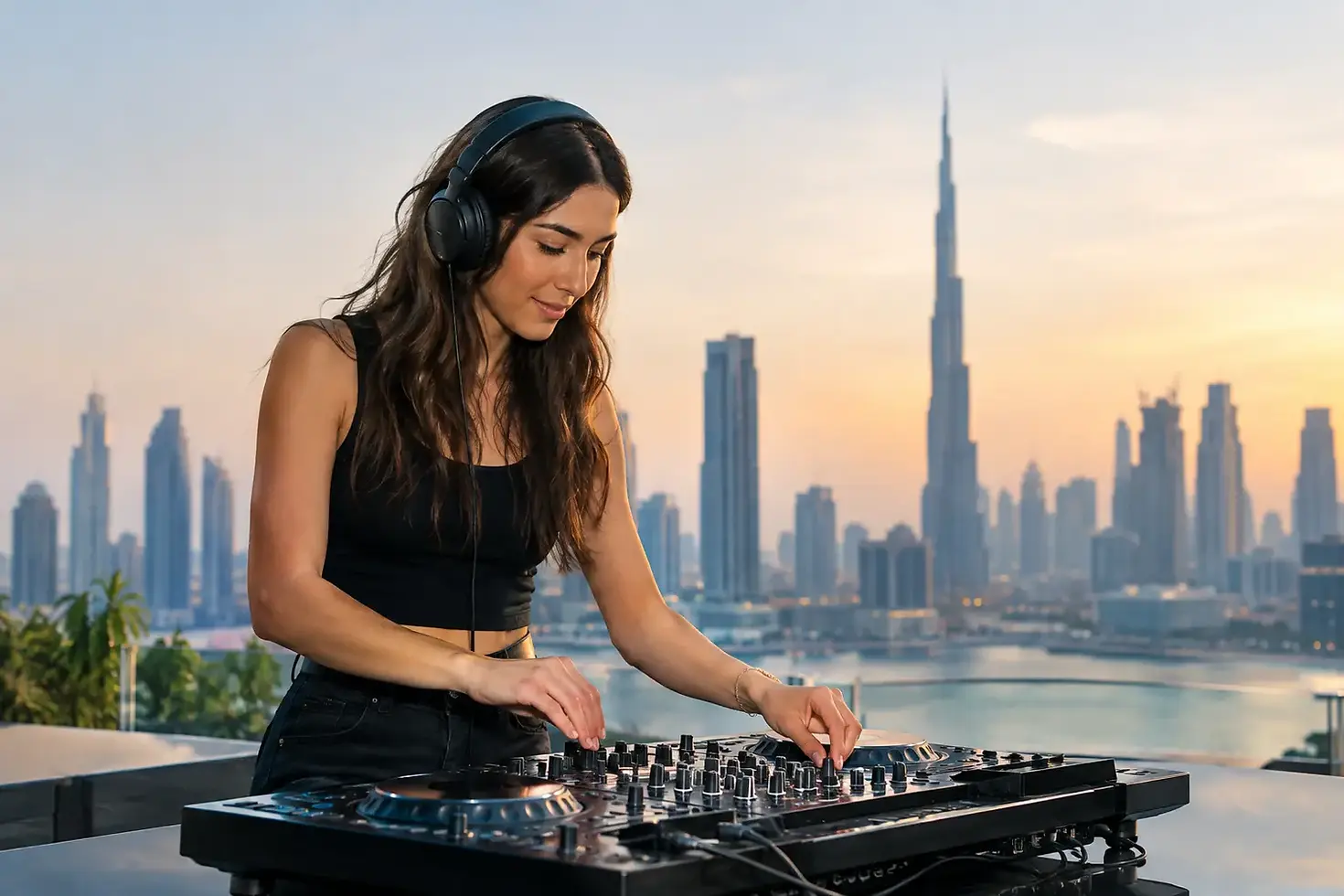
DJ Lessons Dubai for Confident Live Sets
The difference between watching a DJ and becoming one is not owning the latest controller. It is knowing what to do when the next track is approaching, the energy needs to rise, and every decision is yours. DJ lessons Dubai learners choose should turn that pressure into confidence through real, hands-on practice - not hours of vague tutorials and guesswork.
Whether your goal is to play house at a private party, build a credible club-ready set, create content, or take the first step towards a music career, the right tuition gives your progress a clear direction. You learn the techniques, but you also learn how to trust your musical judgement.
Why private DJ training gets results
DJing is a performance skill. You can understand the theory of beatmatching, phrasing and EQ from a video, yet still freeze when it is time to combine two tracks without stopping the music. Progress happens faster when an experienced tutor can hear what is going wrong, explain why it happened and help you correct it immediately.
Private training also means the lesson follows your current ability. A complete beginner may need time to understand tempo, cue points and headphone monitoring. An intermediate DJ may already mix cleanly but need to improve track selection, transitions or confidence on professional equipment. Advanced artists may be focused on building a stronger identity, recording mixes or preparing for specific performance opportunities.
A one-to-one format removes the pressure of keeping pace with a class. You can ask direct questions, repeat a difficult transition and spend more time on the genres that genuinely excite you. That matters in a city with audiences as varied as Dubai's music scene. A melodic house set, Afro house journey, hip-hop performance and commercial open-format set all ask for different musical instincts.
What you should learn in DJ lessons Dubai
Good DJ tuition should never be limited to showing you where the buttons are. Equipment changes, but the foundations of a convincing set remain valuable wherever you perform. You need technical control, musical awareness and the ability to read the moment.
Early lessons typically cover the layout of the decks and mixer, track preparation, BPM, beat grids, cueing and gain staging. From there, beatmatching teaches you how to align tracks accurately, while phrasing helps you bring a new track in at a point that feels natural rather than abrupt. These skills create the structure behind mixes that sound effortless.
EQ control is equally important. Learning to manage lows, mids and highs prevents a mix from becoming crowded, especially when two tracks are playing together. You will then explore transitions that suit the music: a long blend for progressive sounds, a quick cut for high-energy open-format mixing, or a carefully timed echo and filter for impact. Effects can add colour, but they cannot rescue poor timing or weak track choice.
The most useful courses make room for set-building too. You should learn how to organise a music library, set cue points that serve your workflow, plan a musical journey and leave space to adapt. A memorised playlist might work in your bedroom. A DJ who can respond to a room needs options.
Your first sessions should feel practical
There is no need to arrive knowing technical language or carrying a polished playlist. A strong first session starts with your goals and the music you enjoy, then gets you mixing as soon as possible. You might begin by counting beats, bringing in a second track and hearing how small timing changes affect the result.
Expect mistakes. A rough transition is useful information, not a failure. When you understand whether the problem came from tempo, phrasing, levels or track compatibility, you have a clear way to improve it next time. This is why guided practice is more valuable than simply copying a finished mix online.
Choose the level that matches your starting point
Beginners benefit most from a structured foundation. The aim is not to rush into complicated tricks. It is to develop reliable habits: preparing tracks properly, monitoring in headphones, matching beats and making clean transitions. Once these basics feel natural, creativity becomes much easier.
Intermediate DJs should look beyond technical repetition. At this stage, it is often about consistency. Can you maintain energy over an hour? Can you recover calmly if a mix does not land? Can you move between genres without losing the crowd? Targeted feedback helps turn separate skills into a coherent performance.
For advanced DJs, the best route depends on the goal. Someone preparing for club sets may need support with longer musical storytelling and professional booth confidence. A content creator may prioritise recording quality, visual presentation and short, high-impact routines. An artist developing original music may want DJ coaching that complements music production. There is no single definition of progress, which is exactly why personal training matters.
Build confidence between lessons
A weekly lesson creates momentum, but the work between sessions makes the learning stick. Keep practice focused rather than endlessly mixing at random. Choose one outcome for each session: cleaner bass swaps, better phrasing, stronger opening tracks or a 20-minute recorded mix.
Recording yourself is one of the quickest ways to hear improvement. Listen back without judgement and notice the details: Does the energy dip? Are the volume levels even? Did you bring the next track in too early? A short recording gives you useful answers that memory often misses.
It also helps to practise with music you genuinely want to play. Technical exercises have their place, but motivation rises when you can picture yourself sharing the finished set. Build small crates around a mood, venue or time of night, then test how each track earns its place. This develops selection skills alongside your mixing technique.
What to look for in a DJ course
Before committing, consider whether the training is genuinely hands-on, individual and adapted to your ambitions. A course should offer more than a fixed script. Ask how the tutor assesses your level, what equipment you will use, whether you can work in your preferred genres and how practical feedback is given.
The learning environment matters too. Professional-standard equipment helps you understand the setup you may encounter outside the studio, while a dedicated space gives you permission to concentrate without distractions. Convenience matters, but it should not come at the cost of meaningful tutor time.
Dancemania Dubai provides appointment-based one-to-one DJ training in Al Quoz for beginner, intermediate and advanced learners, backed by more than 20 years of industry experience. With 1,000+ trusted customers, award-winning students and learners from over 50 nationalities, the focus is clear: personal guidance that turns interest into practical performance ability. Flexible payment options can also make it easier to start when the right course is available.
DJ lessons Dubai artists can use beyond the studio
The strongest outcome is not simply finishing a course. It is being able to walk up to the decks, prepare your music and deliver a set with purpose. That can lead to house parties, social events, content creation, collaborations, nightlife opportunities or a deeper connection to the music you already love.
Not every learner wants a career, and that is completely valid. DJing can be a serious creative outlet in its own right. But for those who do want to move towards public performance, early professional habits make a difference: arrive prepared, respect sound levels, understand your equipment and keep learning after each set.
Dubai rewards people who show up with a real skill, a clear sound and the confidence to share it. Your first mix does not need to be perfect. It needs to be the first of many. Book a private session when you are ready to stop watching from the crowd and start building the set people remember.


Comments